Guide
Do Brain Supplements Work? A Plain Look at the Evidence
Do brain supplements work? The evidence is thin. The US National Institute on Aging says no vitamin or supplement is recommended to prevent cognitive decline, and the NIH says direct proof that supplements affect dementia risk is lacking. A few small trials show modest effects, mostly for single products at set amounts.
- Agency viewNo supplement recommended
- Strongest proofSleep, activity, medical care
- Mindcept studyNone
- Ask firstDoctor or pharmacist
Written by the Mindcept label deskUpdated
The short answer01
Do brain supplements work?
Mostly not in the way their labels suggest. US health agencies find little proof that supplements protect memory, and none recommends one for that purpose.
The National Institute on Aging (NIA) says that at this time no vitamin or supplement is recommended for preventing Alzheimer's or other forms of cognitive decline (NIA, Cognitive health and older adults). The NIH's complementary health center adds that a few trials of natural products showed modest effects, but direct evidence that supplements change the risk of Alzheimer's or other dementia is lacking (NCCIH, Supplements for cognition).
That does not mean every product is useless or unsafe. It means the claims on most labels run well ahead of the research. A fair reader keeps both facts in view.
What agencies say
No supplement is recommended to prevent cognitive decline.
What trials show
A few small, mixed or modest results. Rarely repeated.
What is missing
Large, long human trials of the exact product on its label.
What was studied02
Do brain supplements really help memory?
The results are mixed. Some ingredients have been tested for years, and the findings are small, unclear or too limited to act on.
NCCIH reviewed the common ones. Its summary is in the table (NCCIH, Supplements for cognition). Remember that each row describes one ingredient at the amounts tested. It does not describe a mixed product.
| Ingredient | What the NIH center says |
|---|---|
| Ginkgo | No conclusive evidence of benefit |
| Omega-3 | Most consistent findings come from fish in the diet, not from supplements |
| B vitamins | Results are mixed |
| Curcumin | Evidence is too limited |
The NIA also notes that some trials of a daily multivitamin in older adults reported modest gains on memory tests (NIA, Cognitive health and older adults). It still does not recommend any supplement for prevention.
Focus03
Do focus supplements work?
There is no sound proof that a focus supplement helps healthy adults concentrate. Poor focus has many treatable causes, and a pill rarely fixes the root.
Cleveland Clinic lists lack of sleep, anxiety or depression, diabetes and low blood sugar, some medicines and menopause among common causes of brain fog. It does not endorse a supplement for it (Cleveland Clinic, Brain fog). Sleep matters most: adults 18 to 60 need 7 or more hours a night (CDC, About sleep).
Read the full brain fog causes guide and sleep and memory before you spend on a bottle.
How to judge04
Are brain supplements effective enough to buy?
Only you can decide, but a few checks show whether a claim has earned your trust. A claim should match the evidence for the same product, at the same amount.
The FTC says a health claim needs competent and reliable scientific evidence, generally randomized human trials of the product itself (FTC, Health Products Guidance). The agency won a case over memory claims that had no such proof behind them (FTC, memory claims court win).
- Does the label print every ingredient and its amount?
- Is there a trial of this exact product, not of a single ingredient?
- Are testimonials doing the work that studies should do?
- Does a maker, a lot code and a way to contact them appear?
Also remember that the FDA does not approve supplements before they are sold (FDA, Q&A on Dietary Supplements).
Applied to one label05
Where does Mindcept fit?
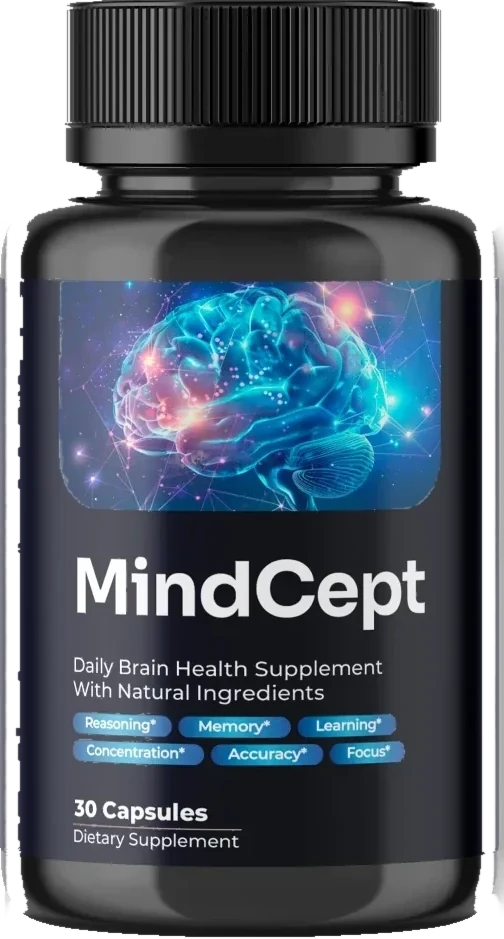
Mindcept fails most of those checks on the supplied pictures. The front shows six asterisked words and a 30-capsule count, but no amounts, no maker and no study of the product.
The sales page names four ingredients, with no amounts. Only spermidine has a memory trial. In that trial, 100 older adults with memory worries took 0.9 mg a day of a wheat germ extract for 12 months. The main memory result did not change (Schwarz 2022, Spermidine in older adults (RCT)). We cannot compare that amount with Mindcept, because Mindcept prints none.
- Memory trial: Yes, one
Spermidine
- Studies measured
- Memory test after 12 months (100 adults with memory worries)
- What they found
- No change in the main memory test; small hints on verbal memory and inflammation that the authors say need testing again (Schwarz 2022, Spermidine in older adults (RCT))
- Memory trial: None found
Konjac glucomannan
- Studies measured
- Body weight (8 trials), blood sugar and lipids (11 trials)
- What they found
- No significant weight loss versus placebo; the blood sugar drop was not robust (Onakpoya 2014, Glucomannan and weight (meta-analysis)) (Jazinaki 2026, Glucomannan and cardiometabolic markers)
- Memory trial: None found
L-arabinose
- Studies measured
- Blood sugar and insulin after a sucrose drink
- What they found
- Lower, later glucose peak after a sugar drink; no change when added to mixed meals (Pasmans 2022, L-arabinose with sucrose (RCT)) (Halschou-Jensen 2015, L-arabinose in mixed meals)
- Memory trial: None found
Baobab fiber
- Studies measured
- Hunger after one smoothie; glucose response in healthy adults
- What they found
- Lower hunger ratings after one smoothie; calorie intake at the next meal did not differ (Garvey 2017, Baobab and hunger) (Pfukwa 2026, Baobab fruit pulp (review))
Each card is about the single ingredient, not about Mindcept. No source found tests Mindcept itself, and the sales page prints no amounts to compare.
See the ingredients page and the six label words for the full answer.
Before you buy06
Who should talk to a doctor before taking a supplement?
Anyone who takes regular medicine, is pregnant, has a health condition or plans surgery should ask first. Supplements can interact with medicines (NCCIH, Using Supplements Wisely).
Keep taking any prescribed medicine. Never stop or change it because of a supplement. Tell your doctor and pharmacist about every product you use (NIH ODS, What You Need to Know). Fiber products can change how fast some medicines are absorbed, which our fiber guide covers.
Memory or thinking changes that disrupt daily life deserve a doctor's visit (Mayo Clinic, Memory loss: when to seek help). Sudden confusion, trouble speaking, face drooping, weakness on one side or a sudden severe headache: call 911 (CDC, Stroke signs and symptoms).
What has evidence07
What can you do instead of, or alongside, a supplement?
Sleep, regular activity, a fiber-rich diet, less alcohol, social contact and treated blood pressure have better support than any supplement. The NIA lists them (NIA, Cognitive health and older adults).
Start with one. The habits guide has a short plan, and the guides hub has the rest.
FAQ08
Mindcept questions people ask
Are brain supplements effective for healthy adults?
There is no solid proof that they are. The National Institute on Aging recommends no supplement to prevent cognitive decline, and trials on healthy adults are small or mixed. Sleep, activity and medical care have better support.
Why do so many brain supplements make big claims?
Supplements may be sold without FDA approval, so a label can carry claims that no study backs. The FTC has acted against memory claims lacking proof. Treat any big claim as marketing until trials of that product exist.
Can a brain supplement lower dementia risk?
No source shows that. The NIH says direct evidence that supplements change dementia risk is lacking. If you worry about memory, book a doctor's visit rather than relying on a bottle.
What is the safest way to try a brain supplement?
Ask your doctor or pharmacist first, show them the package, and keep taking prescribed medicine. Start only one new product at a time. Stop and seek advice if you react badly.
Does a supplement with many ingredients work better?
Not necessarily. Trials test single ingredients at set amounts, and a mix may behave differently. If the label hides amounts, you cannot match it with any study at all.
How long would a brain supplement take to work?
No honest answer exists for most products, since few have trials. The one memory trial of spermidine ran for 12 months and its main memory result did not change.
Do vitamins help memory in older adults?
Results are mixed. Some multivitamin trials in older adults reported modest gains on memory tests, and B vitamin studies are mixed. The NIA still does not recommend any supplement for prevention.
Is there any proof Mindcept works?
No. No study tests Mindcept itself, and no amounts are printed to compare with research. Of its four named ingredients, only spermidine has a memory trial, which found no change in the main score.
Who wrote this09
Written and reviewed by
Pages built from the label, the brand panels and linked NIH, FDA, CDC, FTC and peer-reviewed sources.
Last updated . Read our editorial standards and how we check reviews. This website is the information site for a USA Authorized Mindcept Retailer. It is not the manufacturer or the distributor of the product. We earn money when you buy through our order links.
Keep reading
More about Mindcept
USA Authorized Mindcept Retailer
Ready to try Mindcept?
Check your medicines first, especially insulin, diabetes medicine and thyroid medicine, then pick a pack. A bottle holds 30 capsules; follow the serving printed on the package you hold.
- Secure checkout
- 60-day money-back guarantee
- Order desk: +1 (302) 200-3480